Search Antique Clocks
Showing 201–220
of 245 clocks
type Shelf Ship
-
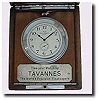 Tavannes jewelers display deck watch.
 -
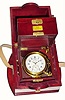 C.1995, Russian, "POLJOT", 56-Hour fusee ship's chronometer.
 -
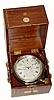 C.1900, American, J. B. Mayo, Chicago, 8-day ship's chronometer.
 -
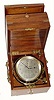 C.1950, Thomas Mercer, St. Albans, England, 8-day fusee ship's chronometer.
 -
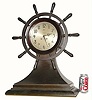 C.1915, Chelsea for Tiffany and Co, New York, Catalog number 411,
 -
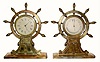 C.1890, English, Bronze Nautical Desk set, clock and barometer.
 -
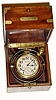 C.1907, Waltham Watch Co., 8-day 15-jewel deck watch, in a well made mahogany case with gimbals, and in excellent original condition.
 -
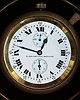 C.1930, Elgin National Watch Co., 1-day Elgin 35 Size, 21 jewel, "Father Time" ships chronometer with up/down wind indicator, and inner and outer boxes.
 -
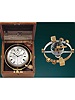 Two-day marine box chronometer with special patented balance and 56-hour winding indicator. Bliss & Creighton, New York, circa 1845.
 -
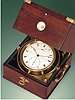 Very fine and rare magogany 8 day-going marine chronometer with power reserve indicator. O. Dumas, circa 1851.
 -
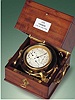 Fine small mahogany, 49 hour-going, marine chronometer with regulator dial and power reserve indicator. Vissire, Paris, sold circa 1860.
 -
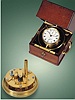 Very fine small, mahogany, 49 hour-going marine chronometer with power reserve indicator; Winnerl, France, circa 1840.
 -
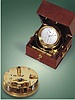 Marine chronometer en forme de tabatire made in Louis Berthoud's workshop after his death, under the direction of Henri Motel. Berthoud Frres, circa 1818.
 -
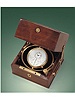 Mahogany two-day marine chronometer with eccentric dial. Breguet et Fils, sold on January 14, 1822.
 -
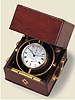 Mahogany, 2 day-going marine chronometer with power reserve. Winnerl, No. 392, circa 1845.
 -
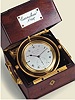 Mahogany, two-day marine chronometer in French style box. Thomas Earnshaw, circa 1795.
 -
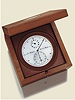 "Grande Montre Marine" 2 day-going, marine chronometer oe tabatire, with regulator dial. Accompanied by a later mahogany box. Louis Berthoud, begun in July 1809, finished in January 1811
 -
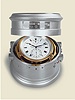 Fine and rare prototype, 2 day-going marine chronometer with special balance and power reserve indication, in its water-resistant aluminum and nickel cylindrical box. Ulysse Nardin, Locle, Suisse, circa 1940.
 -
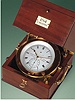 49 hour-going mahogany marine chronometer with power reserve indicator. E. Delepine, France, made in 1896.
 -
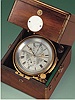 Two-day marine chronometer with auxiliary compensation and 56-hour power reserve indicator. Barraud, London, circa 1850.