Search Antique Clocks
Showing 1,521–1,540
of 8,820 clocks
by Unsigned
-
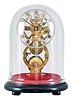 England, skeleton timepiece with center seconds and platform escapement, pierced, triple Venn diagram frame, Roman numeral silvered dial, blued steel spade and poker hands, 8 day fusee movement with 7 jewel lever platform and brass balance, all on a turned, ebonized base with glass dome
 -
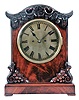 English Victorian Table Clock, with engraved brass roman numeral dial and blued spade hands, brass bezel and beveled glass, figured mahogany case with carved serpentine top featuring scrolls, flowers and leafage, chamfered corners flanking the dial, ogee-shaped buttresses with oak leaves and acorns on the facade, pierced sound vents on the sides, all resting on a molded base with pad feet, eight day, brass fusee spring-powered movement with recoil escapement and hour strike on a gong.
 -
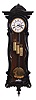 Austria, "Vienna" regulator, 3-weight, grand sonnerie, in an ebonized serpentine case, the white porcelain dial signed Aug. Belisko in Prag, and with embossed pattern brass bezel, and slide mount movement.
 -
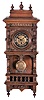 Germany, a miniature "Freischwinger", the walnut case with deeply molded top, recessed frieze with applied brass ornament, the door also with applied, split turnings and brass ornament, and open well with balustrade and supporting brackets, Roman numeral brass dial with engraved center, blued steel hands, 8 day timepiece movement with deadbeat escapement, and brass pendulum, with ornament matching the dial
 -
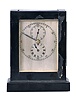 Bench made carriage clock with chronometer escapement and astronomical dial, ebonized, glazed mahogany case, silvered dial with separate chapters for hours, minutes, and seconds, blued steel hands, 8 day timepiece movement with chronometer platform, cut bimetallic balance with rim riveted to balance arm, and Earnshaw spring detent escapement
 -
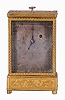 Austria, quarter repeating miniature carriage clock, the rectilinear, gilt brass case on turned feet, front and sides with foliate engraving, carrying handle folding flush with the case top, Roman numeral silvered dial, with engraving matching the case, blued steel hands, round, 30 hour verge fusee movement with blued steel gongs, repeating the last hour and quarter on demand, together with its original leather covered, wooden travel case
 -
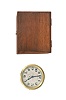 Two pocket chronometer movements, now in brass bowls for gimbal mounting, the first marked "Thos. Buchanan Dublin", 14 jewel fusee movement with Earnshaw spring detent escapement, Z balance with compensation limiting device and helical balance spring, silvered Arabic numeral dial, blued steel hands, serial #1581, the other marked "E. Perregaux", 20 jewel nickel bar movement with pivoted detent escapement, and cut bimetallic balance with gold timing screws, Arabic numeral silvered dial, blued steel hands, serial #7098
 -
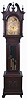 Germany, tall clock, 8 day, time, strike and chime on gongs, three brass weight driven movement in a mahogany case with beveled glass trunk door, broken arch top, paw feet, three wooden finials and applied moldings on base with brass dial, silvered chapter ring, applied brass spandrels, moon phase and seconds bit.
 -
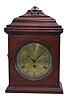 European (Continental), small bracket clock, late 18th century, with fusee / crown wheel / pivoted pendulum movement, and engraved brass dial, in a primitive bell top case of English appearance, with slide-up back and with restorations. Approx 3 day duration (6 rounded channels in fusee) .
 -
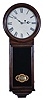 Unknown, probably a Massachusetts made 8 day, weight brass movement wall timepiece.
 -
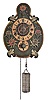 Toggenburg region, Switzerland, attributed to the Buehler family of clockmakers, a hanging 12 hour alarm timepiece, wooden dial with polychrome painted ornament and cow tail pendulum, the hour displayed on the upper chapter, and with quarter indication below, movement with wooden wheels, plates, and verge escapement, and lead weight, dated 1786
 -
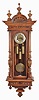 Germany / Austria, a "Vienna" regulator, grand sonnerie, 3-weight with matched pattern weights, dial and pendulum, and in a well made mixed hardwood and walnut veneer case with carved & reeded splt columns to the side of the case and with "built-in" top. The silvered brass chapter ring with Arabic numerals.
 -
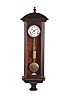 Austria, a miniature, hanging Vienna timepiece, mahoganized, 3 light case with deeply incurved bottom bracket, molded door and cornice, and with arch top crest, Roman numeral white enamel dial with brass bezel, and blued steel hands, 30 hour, weight driven movement with dead beat escapement and silk thread suspension, brass pendulum with steel rod, and brass clad weight
 -
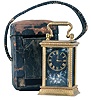 France, a miniature carriage timepiece with enamel panels and travel case, gilt case with carrying handle, the sides and back with polychrome enamel decorated copper panels, the dial with teal blue enamel ground, and decorated with polychrome birds and foliage, gilt Roman numeral chapter ring with fancy gilt hands, 8 day timepiece movement with lever platform, with original leather covered wooden travel case
 -
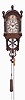 Dutch Friesian Schippertje, or miniature "hood" clock, the dial 5 inches by 8 inches, a good period clock
 -
 New York stye tall case clock, 8 day, time and bell strike, weight driven movement in a mahogany veneer case with broken arch top, shaped trunk door and scalloped skirt and foot. The painted wooden dial has a seconds bit.
 -
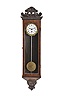 Austria, a miniature, Biedermeier style hanging timepiece, rosewood veneered three light case with contrasting stringing, the base with carved drop, and top with ripple molded cornice and carved, foliate crest, Roman numeral white enamel dial with gilt, ornamental bezel and blued steel hands, 30 hour, spring driven timepiece movement with recoil escapement and silk thread suspension, brass pendulum with steel rod, case back with faint stamp, possibly that of the of manufacturer
 -
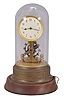 Germany, Eureka style, battery powered, electro-magnetic "skeleton" timepiece mounted on brass base with a large exposed rotating balance with dome.
 -
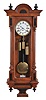 Austria, 3-weight "Vienna Regulator", grand sonnerie wall clock in a walnut and walnut veneer case.
 -
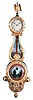 Bench-made mahogany girandole clock, marked "L. Curtis/Concord", with gilt wooden bezel, painted iron arabic numeral dial, the waist section of lyre form, framing the reverse-painted glass inscribed "L. Curtis Concord" and with simulated lyre strings, in gold against a red background, the convex lower glass with stenciled leaves on a red ground with a peaceful country scene and pendulum aperture in gold, all enclosed in a turned gilded frame with gilt balls, the case bottom with carved acanthus leaf pedestal, the early 19th century eight day time only brass movement powered by a lead weight and regulated by a brass-faced pendulum bob and iron rod.