Search Antique Clocks
Showing 381–400
of 1,580 clocks
from England
-
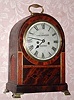 English, Regency era bracket clock, 2-fusee, bell striking, in a mahogany veneered case with latched bezel. C.1830.
 -
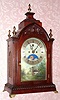 English, 2-Fusee, Bell Strike bracket clock, with painted arched dial, Halifax moon above 6 and with calendar aperture below 12, mahogany case with flame finials and brass side frets. C. 1860.
 -
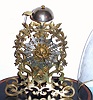 English, Skeleton timepiece, single fusee, cable drive with fretted and silvered dial, and with old glass dome, C.1890
 -
 English, 8-day, painted dial tall clock, 2- weight, in a pine case stained a maple color, C.1840
 -
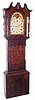 English, Yorkshire area tall clock, wide case with short door, and with 20" rolling moon dial, 2-wt, 8-day, C.1840
 -
 English, Thomas Radford, Leeds, Brass dial, 8-day tall case clock, 2-wt, bell strike, C.1770
 -
 English, Thomas Hunter, Jr, London (156 Fenchurch St, 1761 -- 1802), arched brass dial 8-day tall clock in a typical London style mahogany case. C.1790.
 -
 English, Peter Faichney, Leith, brass dial Georgian, mahogany long case clock, 8-day, 2-wt, in a London style case with long molded tombstone door, and reeded side columns with stop fluting and brass capitals (on both trunk and hood), and the plinth with a raised panel, C.1790,
 -
 English, for Tiffany and Co by J. J. Elliott, London, inlaid mahogany tall case clock, time and gong strike with rolling moon, 2-wt, C.1900
 -
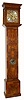 English, Martin Ellwood, Londini Fecit, uncommon and desirable 10 inch brass dial quarter striking movement, 8-day, in an attractive, well proportioned, purpose made tall case with book matched burled walnut veneer, cross banded panels on the sides, and barley twist columns to the hood. The large and robust movement has finely turned baluster pillars, count wheel on the rear plate (cut to strike the quarter hours) on two bells, the hours on a single bell. This is an unusual feature not commonly found on clocks of this period. The dial features a calendar aperture at 6, exquisitely matted center with finely ringed winding holes, a seconds ring and finely pierced hands of the period. C.1690.
 -
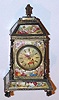 English, Wilter, London, a miniature mantle clock with a chain fusee watch movement, all the fired enamel panels of the case hand painted in Greek and Roman motif, C.1840,
 -
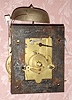 English, 2-train tall clock movement with rack striking on a bell, brass, 8-day C.1850.
 -
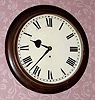 English, F. W. Elliott Ltd., 8-day gallery timepiece (going barrel movement). Circa 1915
 -
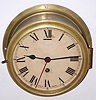 English, Smith Clock Co., Coventry, 8-day lever escapement marine timepiece with center seconds, movement is marked "Astral", one of several trademarks used by Smith during the 20th Century. C.1960.
 -
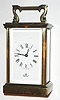 English, IMPERIAL, Brass cased carriage timepiece, in a simple Anglaise case, with unusual "tall" proportions, has attached knob for time set. C.1960
 -
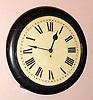 English, Chain Fusee Pub or Dial clock, less bezel, larger than average, C.1900
 -
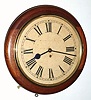 English, W. Elliott, Dial or pub clock, single fusee, time only in a mahogany case, serial No. 17868. C.1900.
 -
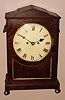 English, Regency bracket clock, movement is prominently stamped J. (James) Condliff, Liverpool (on the front plate), as-found, needing restoration. Circa 1830
 -
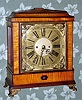 English, double fusee 8-day movement C.1850, now in a C.1975 home made case of tiger maple veneer over plywood.
 -
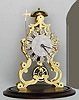 Mid 20th Century, English, Passing Strike Skeleton clock in a large scroll frame with profuse engraving on the front plate.