Search Antique Clocks
Showing 21–28
of 28 clocks
by Willard, Simon
-
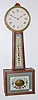 S. Willard's Patent Weight Driven Banjo Clock
 -
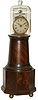 Lighthouse clock, invented by Simon Willard of Roxbury, Mass., 1819.
 -
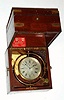 Mixed lot chronometer, C.1855, Eggert and Son, New York, 2-day marine chronometer, No. 968, now in a C.1900 English brass cornered box with flush handles, that is too large for the small movement. [see internet, the Eggerts were very influential in the chronometer field, and Simon Willard, Jr., even apprenticed briefly to Dominic Eggert).
 -
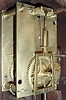 Simon Willard, Roxbury, Mass., 8 days, weight, T-bridge, step train, dead beat escapement brass movement mahogany banded case patent or banjo timepiece, c1805. Throat door held onto the case with four screws. Dial fastened with two L-turns. Rabbeted throat frame. Mahogany backboard. The bottom panel in the base is dovetailed to the sides. A picture of a similar movement with the decorative click is pictured in "Willard's Patent Timepieces" by Paul Foley, pg 22
 -
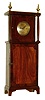 Grafton mantel clock, in the style of Simon Willard, c1900, two days, time only, weight driven movement in a mahogany veneer case with convex solid brass silvered dial signed Simon Willard. James Conlin of Boston reproduced these 30 hours Willard, Grafton wall clocks about 1910 and is a good candidate for attribution.
 -
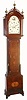 Boston area mahogany tall case clock, C.1820, 8-day, 12 inch painted arched dial, with the later applied signature of Simon Willard. The case with fan inlays on the waist and plinth, brass stop fluted quarter columns to the waist and stop fluted full columns and fret trim on the hood.
 -
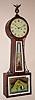 Simon Willard and Son, Boston, Mass., Circa 1828, 8-day time and bell strike Banjo or Patent Timepiece (two weight).
 -
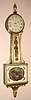 Massachusetts weight banjo timepiece, gold front w/ rope moldings, C.1830, and with the applied signature of Simon Willard and Sons, Boston, the eglomise tablets depicting the Constitution in battle during of the War of 1812.