Search Antique Clocks
Showing 1–13
of 13 clocks
by Chandler, Abiel
-
 New Hampshire, Striking Lyre Banjo, certainly by Abiel Chandler of Concord, NH, the dial signed "Smith", the retailer, C.1835
 -
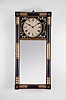 Abiel Chandler, Concord, New Hampshire, 8 day, weight brass movement New Hampshire mirror clock.
 -
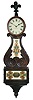 Lyre clock, carved mahogany case with reverse painted glasses, case bottom with incurved bracket and turned drop, and top with carved Prince of Wales feather finial, Roman numeral painted dial signed "A. Chandler", 8 day timepiece movement with diagonally opposed mounting tabs, cast iron weight
 -
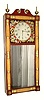 C.1832, Abiel Chandler, Concord, New Hampshire, 8-day time/strike mahogany mirror clock in very fine condition with old finish.
 -
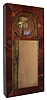 Abiel Chandler, Concord, NH, New Hampshire mirror clock (no dial nor hands), 8 days, time and alarm, weight driven "rat trap" movement in a mahogany veneer case with reverse painted upper glass and lower mirror tablet, c1830
 -
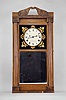 Abiel Chandler, Concord, New Hampshire, 8 day, time and "Rat-Trap" strike weight driven brass movement New Hampshire Mirror clock.
 -
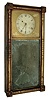 Abel Chandler, Concord, NH, 8 days, brass weight movement New Hampshire Mirror clock, c1835
 -
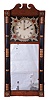 Abiel Chandler, Concord, New Hampshire 8 day, time and strike weight brass "rat-trap'' striking movement mirror clock.
 -
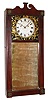 Attributed to Abiel Chandler, Concord, NH "Mirror Clock" 8 day time and rat-trap strike two weight driven movement in mahogany case with four pressed brass corner rosettes and reverse painted dial surround and painted metal dial, c1830
 -
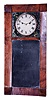 Abiel Chandler, Concord, New Hampshire, 8 day, time and "rat-trap" striking weight driven, brass movement New Hampshire mirror wall clock.
 -
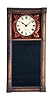 Abiel Chandler, Concord, New Hampshire, 8 day, brass weight driven movement New Hampshire mirror timepiece.
 -
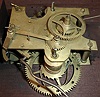 Abiel Chandler, Concord, New Hampshire, 8 days, time and rat-trap strike New Hampshire mirror clock, c1829
 -
![C.1830, Attributed to Abiel Chandler, Concord, NH, seconds pendulum wall banjo, in a mahogany paneled case with carved trim. The sister to this clock [with gilt finial] appears in Distin and Bishop, page 248, fig.580.](/images/robertoschmitt16/t225.jpg) C.1830, Attributed to Abiel Chandler, Concord, NH, seconds pendulum wall banjo, in a mahogany paneled case with carved trim. The sister to this clock [with gilt finial] appears in Distin and Bishop, page 248, fig.580.
C.1830, Attributed to Abiel Chandler, Concord, NH, seconds pendulum wall banjo, in a mahogany paneled case with carved trim. The sister to this clock [with gilt finial] appears in Distin and Bishop, page 248, fig.580.