Search Antique Clocks
Showing 1–19
of 19 clocks
by Barr, Mark
-
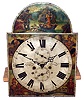 M.(Mark) Barr, Lanark, Scotland brass 8 day time and strike longcase clock movement, painted dial and pendulum, c1836
 -
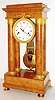 Brocot, France, large portico clock with pinwheel escapement, round time and strike movement with large barrels, possibly of two week duration, count wheel striking on a bell, crutch with fine beat adjustment, white enamel dial signed "Brocot", gilt Breguet style hands, with sweep seconds, heavy gilt brass and steel gridiron pendulum with knife edge suspension beating half seconds, the case veneered in figured ash, with gilt bezel, column mounts, and feet, with gilt beat scale, c1830
 -
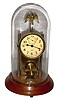 Barr Mfg. Corp., Weedsport, N.Y. electrical impulse pendulum clock, c1925
 -
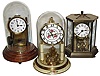 Clocks- 3 (Three): Barr electrical impulse, Weedsport, N.Y.; 2 German 400 day; 20th century
 -
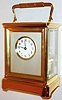 France, large and unusual year running carriage clock, the polished brass Corniche case with beveled glass panels, matte finished gilt frame for matte silver dial mat, white enamel dial with Arabic numerals, blued steel Breguet style hands with hollow tips, the movement made in two sections, the upper with a standard French carriage train, the lower with two large barrels and second wheel, engaging with the upper train, two wheels with steel end piece on back plate, large silvered lever platform, c1900
 -
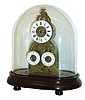 France , skeleton clock, the small 8 days, time and strike, movement also with displays for the alarm and date, brass movement of unconventional design with the time and strike functions driven by a single barrel, Brocot escapement, silk thread suspension, and pinned count wheel Roman numeral, white enamel dial showing the time, and two smaller, Arabic numeral white enamel dials for the alarm and date, all resting on an oval mahogany base with turned feet, and under a glass dome, 19th century
 -
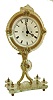 E.G. Zimmerman, Frankfurt, Germany, 30 hours, timepiece movement night clock, the case of transparent glass with cut edge decoration, supported by a polished brass frame and with turned brass feet and decorative finials, candle holder at center of back for dial illumination, Roman numeral translucent glass dial, blued steel hands, the movement barrel bridge marked "E.G. Zimmermann Frankfurt AM", c1880
 -
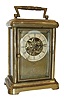 Waterbury Clock Co., Waterbury, Conn.. 8 day time only, carriage clock, employing a skeletonized six spoke long wind movement with the addition of a large barrel to increase duration, lacquered polished brass case, Roman numeral paper dial, dial mask with Waterbury logo and Pat. May 21, 1878, c1880
 -
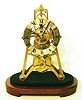 English, single fusee timepiece skeleton clock, in a rafter style frame, and with a simple silvered brass chapter ring, the movement with cable from spring barrel to fusee, no dome, c1850
 -
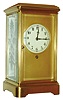 Germany, year going crystal regulator, matte finish lacquered brass case, with beveled glasses, the side glasses with etched designs, gilt dial mat with Arabic numeral, white enamel dial, blued steel hands, rectangular brass movement with 3 plates, resting atop 4 turned pillars attached to the case bottom, large barrel and fusee located behind the train wheels and escapement, dead beat escapement with adjustable pallets, c1920
 -
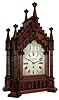 Barraud & Lunds, 41 Cornhill, London, large bracket clock in the Gothic style, carved oak case with buttress corners supporting clustered columns, the door also with clustered column style ornament and topped with foliate carving, gables with carved, stepped ornament, case top surmounted by 6 octagonal pinnacles with crockets, case sides with ornately pierced wooden frets, Roman numeral silvered dial with engraved spandrels, blued steel hands, 8 days, 3 train fusee movement, with chiming on eight bells and counting the hours on a large gong, the back plate also signed , c1845
 -
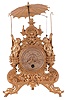 Novelty clock, possibly German, gilt brass case with Baroque ornament, thirty hour timepiece movement with two trains run from a single barrel, one for the flying ball pendulum, alternately caught and released by the two staff wielding putti beneath a parasol, the second train with recoil escapement and pendulum controlling the timekeeping
 -
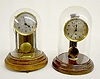 Poole & Barr Battery Operated Dome Clocks
 -
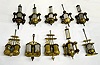 10 Antique Single & Double Barrel Clock Pendulums
 -
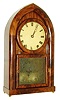 E.C. Brewster, Bristol, Ct., round gothic with detached fusees, mahogany veneered case with brass ball feet, frosted and cut tablet, Roman numeral white painted metal dial, blued steel hollow spade hands, 8 days, movement with rack striking, the front plate stamped "No. 2929", with fusees and spring barrels mounted at case bottom, backboard lined with blue green paper, coil gong with stepped square cast iron base, c1838
 -
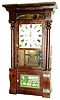 Charles Kirk, Bristol, Conn, RARE Empire cased whistle pipe barrel organ clock, with 16 pipes, in an extra large mahogany column and cornice case, The iron back clock movement actuates the chain fusee driven organ once a day at noon, and there appear to be 7 tunes on the barrel, one for each day of the week, both movements wound weekly, c1850
 -
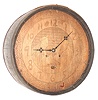 Barrel Clock, probably by C.A. Warner and Co., with Waterbury 8 day, time and strike movement, c1925
 -
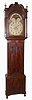 English, "Thomas Barry, Bolton", 8 day, time and strike, tall clock in a mahogany case, c1820.
 -
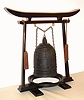 A rare and early Japanese bell clock (Tsurigane Dokei) within a finely cast bronze bell with Japanese characters and double headed dragon form handle; having a posted, iron, double spring driven, striking movement with crown wheel escapement and time regulated by a large circular balance with moveable double weights, originally for adjusting the temporal hours every day before each sunrise and sunset with the change of each Japanese season. The brass dial with single, fixed hand has traditional Japanese numerals 9 through 4 with applied silvered butterflies to the original surrounding dial plate. The rotating dial with adjustable "hour" and "half hour" markers is a common 19th Century upgrade to many very early Japanese clocks that have a single foliot or balance, since changing the weights and hence the rate before sunrise and sunset each day was extremely unhandy. This is verified by J. Drummond Robertson in The Evolution of Clockwork , page 226 saying "we find some of the old clocks "converted" to the new style of motion work. The old fixed hour circle with its revolving centre was removed and the new revolving circle and its fixed hand with adjustable "hour" plates was substituted." This is the case in each of the only other examples of Japanese Bell Clocks of which we are aware: see Japanese Clocks by N.H.N. Mody, plate 113, fig.1 for an almost identical example to the clock being offered. This dial conversion is also apparent in the Bronze Bell Clock sold at Sotheby's Masterpieces From the Time Museum Sale, Part Two, 19 June 2002, lot 126. An inscription on the bell reads Fukushima ya Katsutaro 1689, who may be the maker of either the clock or the bell. Most Japanese spring driven clocks have a fusee to the time train and a going barrel to the strike train. This movement is anomalous, in that is has two going barrels. It may be that the Japanese had not developed a method of turning a fusee at this early date, c1690